Our Soul’s Eternity: Understanding Karma and the Path to Divine Unity


Our Soul’s Eternity: Understanding Karma and the Path to Divine Unity

In the journey of life, the finality of death often evokes fear and uncertainty. However, when viewed through the lens of spiritual evolution, death becomes not an end, but a transformative portal. It is a profound transition where we remain as aware as we are now, continuing our journey of growth and enlightenment.

The Continuity of Consciousness

Upon death, our consciousness persists, as vibrant and perceptive as in our physical form. This continuity suggests that our existence transcends the physical realm, pointing towards a spiritual journey marked by trial, tribulation, and ultimately, forgiveness. We evolve by navigating our emotions, engaging in spiritual practices, and moving steadily towards a profound embodiment of love and soulful illumination.

The Role of Karma in Spiritual Evolution

Karma, a concept often misunderstood, is fundamentally the law of cause and effect that governs our universe. It is our actions and their repercussions that sculpt our future, both in this life and beyond. Interestingly, there are nine types of karma that play a crucial role in our spiritual journey:

1. Sanchita Karma

Sanchita Karma is like a vast library of every deed, thought, and action we have accumulated over countless lifetimes. It holds immense potential for learning and growth, serving as the backdrop against which our soul’s journey unfolds. This extensive reservoir of karma reminds us that every experience we’ve had has a purpose, teaching us valuable lessons and helping us to evolve spiritually.

By understanding that we carry this collection with us, we are empowered to sift through it with wisdom, discerning which lessons are needed for our current life’s challenges. This insight inspires us to live more mindfully, knowing that our current actions are adding to this vast storehouse. With compassion and self-awareness, we can begin to resolve these past karmas, paving the way for a freer, more enlightened existence.

2. Prarabdha Karma

Prarabdha Karma is the portion of your accumulated karma that is ‘ripe’ for experiencing in this lifetime. It’s like having a syllabus of lessons that are scheduled for the current term of your life’s school. These are unavoidable and must be faced with courage and integrity, as they shape the core circumstances of your life, such as your health, family, and significant life events.

Facing these karmic lessons with an open heart and a willing spirit can transform potentially challenging experiences into profound growth opportunities. Each encounter, each challenge is a step towards liberation, meticulously planned by your higher self to ensure that you learn, grow, and evolve. Embrace these lessons with gratitude, for they are gateways to deeper wisdom and spiritual maturity.

3. Kriyamana Karma

Kriyamana Karma, often immediate and visible, is created by our everyday actions and decisions. It’s akin to painting on a fresh canvas each day; our choices today color our immediate future. This type of karma empowers us because it is directly within our control—we can shape a brighter, more positive future by opting for actions that are aligned with kindness, integrity, and love.

Being mindful of the karma we create each moment invites a joyful responsibility. It encourages us to live deliberately, to choose paths that not only benefit ourselves but also uplift others. This ongoing creation of good karma fosters a life filled with peace and satisfaction, knowing that our benevolent actions ripple out into the world, creating waves of positive change.

4. Agami Karma

Agami Karma refers to the actions we take today that will bear fruit in future lives. It’s a forward-looking type of karma, emphasizing the continuity of our soul’s journey beyond the current lifetime. By making wise, virtuous choices now, we plant seeds for future prosperity, health, and happiness—a testament to our foresight and spiritual maturity.

This concept instills a profound sense of responsibility and hope. It encourages us to think beyond the immediate consequences, to act in ways that honor our deepest values and aspirations for our soul’s long-term journey. Each act of kindness and every decision made in wisdom lays down a path of light for our future selves, ensuring our continued evolution towards enlightenment.

5. Nitya Karma

Nitya Karma encompasses the daily rituals and duties performed with discipline and devotion, without any personal desire for the outcome. These are the routines and practices that ground us, bringing stability and regularity to our lives. Like the steady rhythm of a heartbeat, Nitya Karma provides a calming, stabilizing force in our spiritual practices, fostering a consistent connection with the divine.

Engaging in Nitya Karma is a beautiful expression of our commitment to spiritual growth. It reminds us that every day is a sacred opportunity to connect with the divine, to sanctify our lives through routine acts of devotion. These daily rituals are not chores but chances to express our love for the divine, turning every ordinary moment into something profoundly meaningful.

6. Naimittika Karma

Naimittika Karma arises from duties that come up due to specific events or needs, such as aiding those in distress. This type of karma calls us to action in response to the world’s immediate needs, encouraging us to step beyond our personal boundaries and serve others. It is in these acts that we find a deep connection to humanity, an expression of our compassion and empathy.

By responding to these calls for help, we engage in a powerful form of spiritual practice that refines our souls and deepens our understanding of love. Each act of selflessness elevates our being, aligning us more closely with divine will. It’s a reminder that we are all interconnected, and our actions can bring about significant positive changes in the lives of others.

7. Kamya Karma

Kamya Karma involves actions performed with specific desires in mind. It is driven by our personal hopes and ambitions, whether for success, joy, or relationships. While often viewed as self-serving, when guided by ethical and moral considerations, Kamya Karma can lead to fulfilling and enriching life experiences, contributing to our overall happiness and well-being.

When we approach Kamya Karma with a clear, ethical perspective, we ensure that our desires do not lead us astray from our spiritual path. This balancing act encourages us to pursue our dreams while maintaining a harmonious alignment with our deeper spiritual goals. It’s about finding joy and fulfillment in our desires while contributing positively to the world around us.

8. Prayaschitta Karma

Prayaschitta Karma is about conscious actions taken to atone for past misdeeds. It’s an intentional process of making amends, a way to cleanse our spiritual slate by acknowledging our mistakes and rectifying them. This type of karma reflects our willingness to face our shortcomings and to actively seek forgiveness and redemption through sincere efforts.

This journey towards redemption is deeply transformative. It teaches humility, fosters compassion, and strengthens our moral integrity. By embracing Prayaschitta Karma, we not only heal the wounds we’ve caused but also pave the way for renewed spiritual growth and deeper connections with others. It’s a testament to the power of forgiveness—both giving and receiving it—as a pathway to true peace.

9. Aprarabdha Karma

Aprarabdha Karma is the unmanifest karma that lies dormant, not yet affecting our lives. Like seeds waiting in the soil, these karmic traces hold the potential to sprout in future circumstances, given the right conditions. This type of karma reminds us that our past actions can emerge in unexpected ways, urging us to live with integrity and mindfulness at all times.

Understanding Aprarabdha Karma encourages a thoughtful approach to life, aware that our actions can have long-term effects that might not be immediately apparent. It inspires us to choose wisely and act kindly, maintaining a vigilant and caring approach to life. By doing so, we ensure that future manifestations of our actions are positive, nurturing a life of harmony and spiritual prosperity.

10. Adhidaivika Karma

Adhidaivika Karma involves the larger forces at play—natural events and divine interventions that shape our life circumstances in ways beyond our personal control. Recognizing this type of karma helps us cultivate acceptance and resilience, understanding that not everything in life is within our power to change. It teaches us to find peace in chaos and strength in adversity, embracing life’s unpredictable nature with grace and faith.

This acceptance does not mean passivity; rather, it encourages us to focus our energy on what we can influence while surrendering to the flow of life in areas we cannot control. By embracing Adhidaivika Karma, we learn the art of balance—actively shaping our lives where possible, and gracefully accepting life’s surprises with an open heart and mind.

11. Adhibhautika Karma

Adhibhautika Karma springs from our interactions with other beings and the natural world. It underscores the impact of our everyday behaviors on our environment and on those around us. This type of karma invites us to live consciously, respecting all forms of life and recognizing that our well-being is intricately connected to the well-being of others.

Engaging positively with our environment and fellow beings enriches our lives and helps cultivate a supportive community. It teaches us the value of kindness and cooperation, reminding us that we are part of a larger whole. By nurturing positive Adhibhautika Karma, we contribute to a world of harmony, peace, and mutual respect.

12. Adhyatmika Karma

Adhyatmika Karma is deeply personal, stemming from our own physical and mental actions. It involves our health, thoughts, and emotions—areas where we have significant control. This type of karma encourages us to look inward, to heal and nurture ourselves, recognizing that inner harmony is the foundation for outer peace.

By focusing on Adhyatmika Karma, we take responsibility for our inner state, striving for health, clarity, and calm in our minds and bodies. This personal work is crucial, for it directly influences our ability to act wisely and compassionately in the world. It’s a reminder that the journey to peace begins within ourselves, and from there, it radiates outward, touching all aspects of our lives.

As we navigate through these types, we have the opportunity to dissolve and forgive, moving closer to our purest, most divine nature. Each act of forgiveness, both for ourselves and for others, is a step toward becoming one with divine consciousness.

The Guidance of Enlightened Masters

The path to illumination is arduous and often riddled with challenges that can seem insurmountable. In these times, the presence of an enlightened master can be invaluable. Spiritual leaders like Amma, Mother Meera, Paramahansa Yogananda, Anandamayi Ma, and Babaji serve as beacons of divine light. They embody pure consciousness and offer guidance, absorb our karmic debts, and expedite our journey towards liberation, or moksha.

Conclusion: The Peaceful Acceptance of Death

Understanding and accepting the role of karma in our lives invites a peaceful acceptance of death. It allows us to view each moment as an opportunity to clear karmic debts and forge a path toward eternal unity with the cosmos. By embracing this perspective, we can live our lives with purpose, love, and tranquility, knowing that every action we take is a step on the path to ultimate spiritual realization.

Death, therefore, is not an end but a continuation of our journey toward enlightenment. Let us walk this path with grace, forgiving and releasing, guided by the wisdom of those who have mastered the art of living and dying in profound harmony with the universe.

Get The Shankara Oracle and dramatically improve your perspective, relationships, authentic Self, and life.

About The Author:

image

Paul is a spiritual healer and coach with more than 30 years of experience. He is the founder of The Shankara Experience, and creator of The Shankara Oracle and The Personality Cards.

His work is focused on guiding seekers to inner freedom and awakening.

The Role of Spiritual Gurus in Modern Times: Guidance on the Path to Enlightenment

The Role of Spiritual Gurus in Modern Times: Guidance on the Path to Enlightenment

Spiritual gurus have been pivotal figures in the quest for enlightenment throughout history. Figures like Amma, Mother Meera, and past enlightened masters from India have left indelible marks on the lives of their followers. Understanding their roles can provide invaluable insights into how we can deepen our own spiritual practices.

What Do Spiritual Gurus Do?

Gurus serve as guides on our spiritual journey, offering teachings, personal guidance, and opportunities for deep spiritual community. They bridge ancient wisdom and modern challenges, making timeless truths accessible and applicable to our lives today.

Teaching Ancient Wisdom

Gurus teach profound spiritual principles that have been preserved for millennia. Their teachings help us understand our true nature, the workings of the mind, and how to achieve harmony with the universe. This wisdom, passed down through generations, is often tailored to the needs of contemporary seekers, making it relevant and transformative.

Taking on Karma

One of the most compassionate roles of a spiritual guru is their ability to take on the karma of their disciples. This extraordinary act helps alleviate the spiritual burdens of their followers, accelerating their journey towards enlightenment. It’s a profound demonstration of selfless love and commitment to the welfare of others.

Fostering Spiritual Communities

Additionally, spiritual gurus often create and nurture communities that support each member’s journey to self-realization. These communities provide a space for shared experiences, mutual support, and collective growth, all guided by the guru’s teachings.

Conclusion

The impact of spiritual gurus is profound and multifaceted. They not only teach and guide but also transform lives through their compassion and wisdom.

If you are seeking guidance on your spiritual path or wish to learn from the teachings of enlightened masters, consider joining our community. Here, we explore these ancient teachings together and support each other on the journey to enlightenment and beyond.

Join us and find not just teachings but a pathway to deep peace and spiritual realization in this life.

Feel free to share this message with anyone who might be searching for simplicity and deeper fulfillment in life. With more people like you in our community, the more light we can share with the world. Join HERE.

Oh and you will LOVE The Shankara Oracle – check out the store for more information.

Get The Shankara Oracle and dramatically improve your perspective, relationships, authentic Self, and life.

About The Author:

image

Paul is a spiritual healer and coach with more than 30 years of experience. He is the founder of The Shankara Experience, and creator of The Shankara Oracle and The Personality Cards.

His work is focused on guiding seekers to inner freedom and awakening.

Work as Spiritual Practice: Living Your Daily Sadhana

In our pursuit of spiritual development, we often set apart our daily work from our spirituality, treating them like two different aspects of life that have nothing to do with each other. Sadhana is a Sanskrit word meaning disciplined and devoted practice or study leading to spiritual growth.  When you approach work as spiritual practice, you improve not only the professional but the spiritual journey.

Sadhana is a Sanskrit word meaning disciplined and devoted practice or study leading to spiritual growth. Such an approach improves not only the professional but also helps us advance on our spiritual journey.

What is Sadhana and How Does It Relate to Work as Spiritual Practice?

Sadhana is a Sanskrit word meaning disciplined and devoted practice or study leading to spiritual growth. When we treat our work as our sadhana, we look to each task as an opportunity for our spiritual growth and self-expression. To make our work into our sadhana, we can begin by changing our attitude toward work. Instead of looking to it as something we must do to survive, we should treat it like a necessary part of our spiritual journey.

The Power of Gratitude

The first thing you need to do if you want your work to become a way of practicing your spirituality is to develop an attitude of gratitude toward your work.  The ability to work in itself is an opportunity and a blessing that we are given. We can bring the sense of abundance of purpose that gratitude gives us into our work.

Gratitude transforms work into spiritual practice by shifting our focus from obligation to sacred participation in life’s flow.

Infusing Virtue and Love into Your Work as Spiritual Practice

To truly make our work a form of sadhana, we must infuse our actions with virtue and love. This means approaching each responsibility with integrity, compassion, and excellence. Whether you are crafting a piece of art, coding software, or managing a team, when your work is carried out with a deep sense of care and a commitment to quality, it becomes a meaningful part of your spiritual practice.

When every action is carried out with awareness and love, work becomes an active expression of sadhana—a daily opportunity for self-transcendence.

Work as a Reflection of Our Spiritual Values

By aligning our professional conduct with our spiritual values, we create a harmonious life where our spiritual beliefs directly influence how we interact with the world. This alignment encourages us to bring our whole selves to every aspect of our lives, fostering a sense of completeness and satisfaction.

Transforming Work Into Sadhana: Living Spiritual Practice Every Day

Transforming your work into a spiritual practice is a powerful way to live your sadhana daily. It turns ordinary tasks into opportunities for personal growth and expression of your deepest values.

If this approach resonates with you, consider joining our community, where we support and inspire each other to integrate spirituality into all facets of life. Together, we can make every day a step towards deeper spiritual fulfillment.

Feel free to share this message with anyone who might be searching for simplicity and deeper fulfillment in life. With more people like you in our community, the more light we can share with the world.

Oh and you will LOVE The Shankara Oracle – check out the store for more information.

Get The Shankara Oracle and dramatically improve your perspective, relationships, authentic Self, and life.

 

Last Updated: October 6, 2025

About The Author:

image

Paul is a spiritual healer and coach with more than 30 years of experience. He is the founder of The Shankara Experience, and creator of The Shankara Oracle and The Personality Cards.

His work is focused on guiding seekers to inner freedom and awakening.

Spiritual Materialism and the Ego: Finding True Enlightenment on the Spiritual Path

There are many challenges on the path of spiritual growth, one of which is ‘spiritual materialism’.  Chögyam Trungpa first used this term to describe how our ego can use spiritual practices for its own validation. This happens when we use spirituality as a way to strengthen our self-image instead of moving beyond it. When we do this, we can become selfish in a subtle way and undermine our spiritual progress.

Understanding Spiritual Materialism and Its Impact on Enlightenment

The purpose of spirituality is to help us achieve a deeper understanding of ourselves and the Universe. Spiritual materialism occurs when we utilize religion or any other metaphysical system to boost our ego or to achieve specific material goals. For instance, we might use meditation or various practices to manifest particular changes in our life, improve productivity or to improve our social standing. 

Getting rewards like these is not in itself problematic. It is problematic when they come to overshadow the real purpose of spirituality. 

The Ego and Enlightenment: Recognizing Subtle Spiritual Traps

Ego has great capacity for adaptation and survival. Even during spiritual exercises ego may find its voice by making enlightenment just another target among many others that should be met. This approach is contrary to the purpose of spiritual practices to dissolve the barriers of the ego, not fortify them. 

Navigating Spiritual Materialism With Awareness and Authenticity

We need to always question ourselves about why we do what we do to ensure we continue to walk on the spiritual path with sincerity. Are we sincerely seeking knowledge and connection? Are we secretly hoping to feel superior or special? The spiritual journey requires humility, honesty and an open mind. 

The Role of Community in Overcoming Spiritual Materialism

Engaging with a community can be invaluable in this journey. A supportive spiritual community provides not only companionship but also perspective that can help identify and overcome instances of spiritual materialism. By sharing our experiences and challenges, we can help each other stay true to the path of genuine spiritual inquiry.

Beyond Spiritual Materialism: Living From True Enlightenment

Recognizing and overcoming spiritual materialism is crucial for anyone serious about spiritual growth. It requires vigilance, honesty, and a commitment to continual self-examination. By understanding and addressing this challenge, we can ensure that our spiritual journey leads to true self-transcendence and not just another form of ego gratification.

In both spirituality and the traps of spiritual materialism, the path forward is one of deep introspection and genuine practice. Engaging with these ideas can lead not only to personal transformation but also to a deeper, more authentic experience of life itself.

Feel free to share this message with anyone who might be searching for simplicity and deeper fulfillment in life. With more people like you in our community, the more light we can share with the world. 

Oh and you will LOVE The Shankara Oracle – check out the store for more information.

Last Updated: October 6, 2025 

About The Author:

image

Paul is a spiritual healer and coach with more than 30 years of experience. He is the founder of The Shankara Experience, and creator of The Shankara Oracle and The Personality Cards.

His work is focused on guiding seekers to inner freedom and awakening.

Difference Between Spirituality and Religion: Understanding the Path to Spiritual Authenticity

Exploring the Distinction Between Spirituality and Religion

Many seekers today search for the difference between spirituality and religion, hoping to understand which path offers deeper meaning and authenticity.

In the pursuit of understanding our true selves, we often encounter two distinct yet overlapping concepts: spirituality and religion. While both can guide us towards deeper understanding and fulfillment, they do so in fundamentally different ways. This distinction is crucial in our journey to connect authentically with our innermost selves and the universe.

The Layers We Inherit: Cultural, Social, and Religious Beliefs

From birth, we are draped in layers of cultural, social, and religious identities. These layers, while providing a sense of belonging and structure, can also obscure our true nature. They shape our perceptions and expectations, often dictating our beliefs and behaviors according to pre-established norms.

Religion: A Structured Approach to Belief and Tradition

Religion offers a structured path complete with rituals, scriptures, and congregational practices. It provides a community and a moral framework, which can be comforting and guiding. However, religion can also impose rigid interpretations that may stifle individual spiritual experiences. For some, these prescribed beliefs and practices might not resonate, feeling more like a barrier than a bridge to their true spiritual essence.

Spirituality vs Religion: A Personal Journey to Authenticity

Unlike religion, spirituality is often seen as a personal and unstructured pursuit. It involves exploring one’s own beliefs and experiences without the confines of an institutional framework. Spirituality encourages personal growth through introspection and connection to the universe, fostering a direct and personal experience of the divine.

The Path to Spiritual Authenticity Beyond Religion

The journey towards spiritual authenticity involves peeling away these inherited layers to discover the core of one’s being. It’s about listening to one’s inner voice and following the soul’s natural inclinations towards love, compassion, and understanding. This path encourages us to forge a connection that is not mediated by dogma but is direct and profound.

Conclusion: Choosing Between Spirituality and Religion

Understanding the difference between spirituality and religion can empower individuals to choose the path that best suits their quest for meaning. While religion can guide and support, spirituality offers a unique and personal route to discovering our authentic selves. Embracing this journey can lead to profound self-awareness and fulfillment.

Feel free to share this message with anyone who might be searching for simplicity and deeper fulfillment in life. With more people like you in our community, the more light we can share with the world. Join HERE.

Oh and you will LOVE The Shankara Oracle – check out the store for more information.

Get The Shankara Oracle and dramatically improve your perspective, relationships, authentic Self, and life.


Last Updated: October 3, 2025

About The Author:

image

Paul is a spiritual healer and coach with more than 30 years of experience. He is the founder of The Shankara Experience, and creator of The Shankara Oracle and The Personality Cards.

His work is focused on guiding seekers to inner freedom and awakening.

How to Clear Karma and Transform Your Life

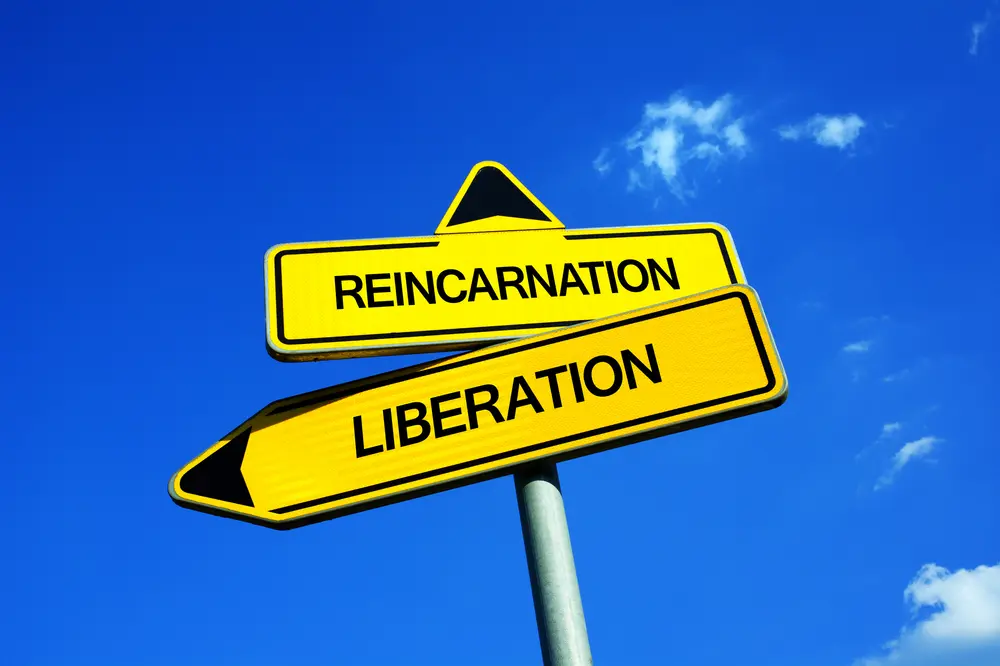
Road sign showing two paths: reincarnation and liberation - symbolic of choosing to stop karma


Road sign showing two paths: reincarnation and liberation - symbolic of choosing to stop karma

Last updated: July 29, 2025

Karma is not a punishment. It’s not a blessing either. It’s not a system of cosmic tit-for-tat, nor is it the divine version of Santa’s naughty-and-nice list. Karma is memory – raw, undigested memory that shapes the very fabric of your being.

Yes, memory.

Not just your thoughts or what you recall over coffee with a friend – but the invisible scaffolding of your patterns, your trauma loops, your wild instincts, your hesitations, your weird cravings at 2 AM, your broken relationships, and your chronic illnesses. It’s all karma. It’s all memory, rippling through your nervous system, breath, flesh, choices, and soul.

And if you’re serious about spiritual growth and liberation – not just spiritual tourism, but actual freedom – then you must stop trying to be good and start becoming free.

Let’s torch the bullshit and get to the truth.

What Karma Really Is – and Why Most People Get It Wrong

Forget the bland definitions of karma that spiritual influencers regurgitate like fortune cookie proverbs. Karma isn’t just “what goes around comes around” – that’s moralism wrapped in spiritual drag.

Karma is bondage. But not because someone out there is keeping score. It’s because YOU are keeping records – and you don’t even know it.

Abstract colorful galaxies merging — visualizing karma as cosmic memory and energetic patterning

Every thought, every action, every reaction – even the twitch in your jaw when someone disrespects you – leaves an imprint. This imprint becomes part of your system. It’s carried in your tissues, your aura, your mind. 

Most of it isn’t from this life. Most of your karma – your unconscious patterning – is inherited, assumed, absorbed, and embedded from lifetimes before this one.

Sadhguru says karma is the “residue of action.” But in Death: An Inside Story, he goes deeper. He calls it “software” that drives your entire system. The body is memory. The mind is memory. Even your longing for spiritual freedom is memory – it’s the echo of something you once knew and lost.

So if karma is memory – and memory is what keeps recreating your reality – then what the hell are you going to do about it?


The Three Types of Karma – and How They Rope You In

To dissolve karma, you need to see how it loops you.

There are three classic types of karma:

  • Sanchita Karma – The big fat storage drive. All karma from all lives – like a hard drive full of unconscious bullshit.
  • Prarabdha Karma – The current playlist. The part of your stored karma that’s playing out now – your health, relationships, soul contracts, neuroses, opportunities, and limitations.
  • Agami Karma (or Kriyamana) – The fresh recordings. The new karma you’re creating now with your choices, words, and responses.

Here’s the kicker – your entire self is a karmic imprint. Your name, your identity, your fears, your sexuality, your preferences – they are all conditioned. None of it is you. It’s all programming. A human face overlaid with clocks and numbers — representing karmic timelines and unconscious imprinting

This is the illusion of karmic destiny.

Advaita Vedanta tells you this directly: You are not the body. You are not the mind. You are not the doer. You are the field of awareness within which all of this karmic play is happening.

But as long as you believe you are the actor in this karmic movie, you’re stuck playing it out.

Stop Trying to Fix Your Karma – Start Dissolving the Actor

Most people try to “fix” their karma like they’re repainting a prison cell –  but we don’t get out of prison by making it prettier.

The goal is not to tidy up your karma. The goal is to step out of the karmic structure entirely. That is liberation (moksha).

And the only way to do that?

Burn the illusion of being a fixed “self” who owns this karma.

Your identity is the ego’s favorite costume. “I am a healer.” “I am a mother.” “I’m working on myself.” “I need to clear my karma.” All of it – stories within stories. But this is not YOU.

If you are Brahman – the undivided consciousness – then you are already free. But your karma keeps dragging you back into the illusion of separation.

So you need to  start remembering your true nature instead of trying to manage your life.

This is not metaphor. It’s not poetry. It’s a brutal, liberating fact.

The Advaita Sword: Cut Through the Illusion, Don’t Decorate It

Advaita Vedanta doesn’t care about your drama. It is the most ferocious path because it does not cradle your pain. It burns it.

Here’s the truth Advaita wants you to swallow:

    • You are not on a journey.
    • You are not evolving.
    • You are not here to “learn lessons.”

You are Brahman. Pure, formless, infinite awareness. But you think you are a person in a body with a past and a future – and that thought is your primary karma.

This is what Sadhguru means when he says, “If you sit here without the influence of memory, you’re liberated.” Because karma is memory.

To live without karma is to live without the compulsions of memory.

So what does that mean in real life? You stop reacting. You stop identifying. You watch everything, but you own nothing. Not even your pain.

That’s the sword. That’s how karma is burned – not by purification, but by non-identification.

Fiery warrior holding a sword at sunrise — symbolizing disidentification from ego and karmic illusion

The Buddhist Torch: Burn the Roots with Awareness

Buddhism takes a more methodical approach – it gives you tools for the slow-burn dissolution of karma. And make no mistake, it’s just as ruthless in its wisdom.

The Eightfold Path is not a checklist to be a better person. It’s an architecture of deconstruction.

    • Right view – See the illusion.
    • Right intention – Stop fueling delusion.
    • Right action – Starve the drama.
    • Right livelihood – Exit the game of harm.
    • Right effort – Turn your awareness inward.
    • Right mindfulness – Witness everything, own nothing.
    • Right concentration – Dissolve into the space beyond thought.

Every time you meditate with awareness, you stop recording new karma. Every time you let go of a grudge without spiritual bypassing, you erase a karmic loop. Every time you breathe through the pain instead of controlling it, you open a door.

Buddha wasn’t giving us dogma. He was giving us exit strategies.

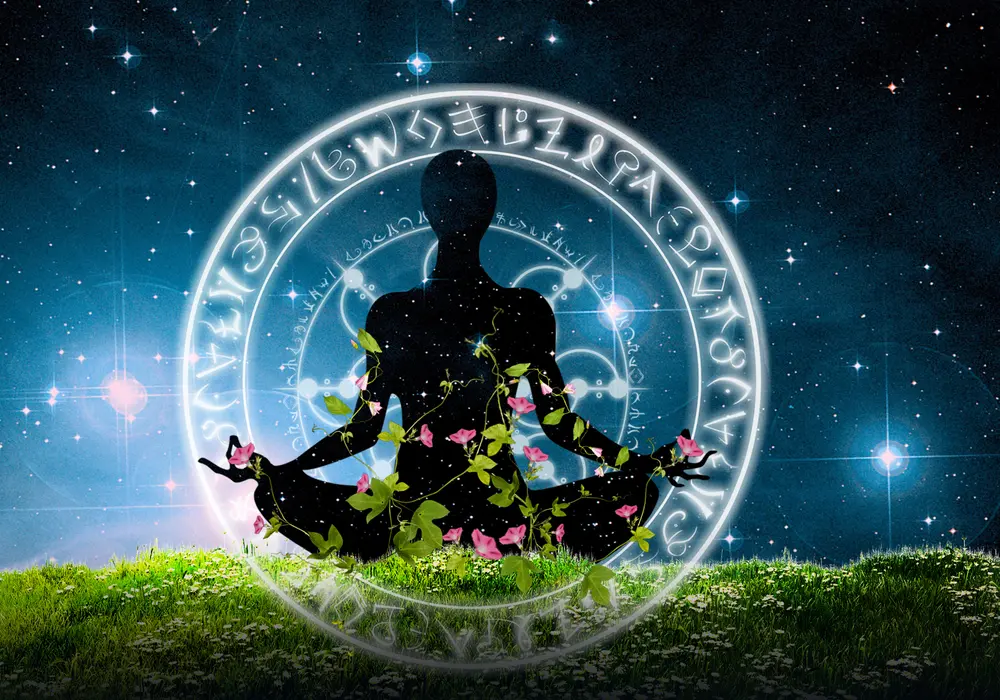
Silhouette of a meditating figure in lotus pose surrounded by cosmic symbols and glowing glyphs, seated on grass under a starry sky with flowers growing from the body — symbolizing mindful living, inner awareness, and karmic dissolution.

Why the Guru Is a Nuclear Reactor for Karmic Meltdown

Without grace, you will drown in your karma. Sorry. It’s true.

There’s a reason all traditions point to the guru – the real guru – not the Instagram messiah. A true guru is a karmic black hole. Their presence alone burns through your stored garbage. Why? Because they are not operating from memory.

You’re trying to undo karma while still being a person. The guru has ceased being a person. They’re functioning as consciousness itself. When you get close enough, their frequency torches your backlog.

But that only happens if you drop your drama and get real. Devotion is not submission. It’s dissolving your resistance to being loved and burned alive by Truth.

This is why Sadhguru says devotion is the most intelligent way to live. You give up the small you, and let the fire of grace reshape your being.


How to Actually Stop Karma – The Real Steps (Not the Bullshit)

Image representing the burning of karma and emergence into stillness

Let’s get real. Here are the ways to actually stop karma in your life:

1. Dissolve Identity

Stop reinforcing stories. Every “I am” is a chain. You can use them for play – but don’t believe them. Don’t attach to “I am hurt.” Don’t cling to “I need to be seen.” Identity is the stick stirring the karmic pot.

2. Wake Up the Witness

Become ruthless in watching your reactions. Watch your triggers, not from judgment – but from awe. See how memory takes over. Feel how deeply you’ve been programmed. Awareness is the solvent.

3. Let Emotions Flow – Without Labels

Do not bottle. Do not explain. Cry. Scream. Shake. But don’t narrate. Emotional energy is karmic momentum. Releasing it without retelling the story is alchemy.

4. Practice Stillness Daily

Whether it’s breath, mantra, or silence – you must sit in stillness. Daily. No excuses. In stillness, you stop recording karma. You begin unraveling the identity that built the knots in the first place.

5. Surrender to Grace

Invite the guru. The divine. The unknown. Let something greater than you enter. Karma ends where mystery begins. Surrender is not giving up – it’s getting out of the way.


Why It Gets Worse Before It Gets Better

You will feel like you’re dying. Good. That means it’s working.

When karma burns, it doesn’t go quietly. The moment you get intentional – the moment you say, “I want to be free,” the karmic files start crashing down.

You lose jobs. Lovers ghost you. Your body freaks out. Your plans collapse.

This is grace. It’s called karmic acceleration. The universe is honoring your request by clearing the decks. And no, it’s not easy.

But if you sit in the fire – if you don’t run back to comfort – you’ll emerge free.

Karma dies when your attachment to meaning dies.

It’s Not About Being a “Good Person” – It’s About Being Free

Karma doesn’t care if you’re polite. It doesn’t care if you meditate while lying to yourself. It doesn’t care if you recycle and say Namaste.

Karma is watching where you act from. Are you moving from memory or awareness?

Are you choosing from fear or truth?

Are you living to avoid pain or to open into the mystery?

You want transformation? You want liberation?

Then stop managing your karma like a frightened accountant – and walk straight into the center of it with fire in your eyes.


The Final Truth: You Are Not Your Karma

You are not broken.

You are not healing.

You are not your history.

You are the one who watches it all.

You are Shiva – the destroyer of form.

You are the silence that existed before karma began.

And that silence is your liberation.

Right now – not someday, not in a future life – but now. If you can drop the act, the narrative, the attachments, and the righteousness… even for a moment… you will taste the freedom that all the sages wept over.

Don’t chase karma.

Burn it.

Stand still.

Let the fire come.

If you want guidance and support on your journey from someone who will help you rise into truth, book a private intuitive reading with me. You’ll receive unfiltered truth to guide you toward your healing and liberation.

Q&A: Your Karma-Busting Questions Answered

Q1: What exactly is karma according to Advaita Vedanta and Sadhguru’s teachings?
Karma is not a cosmic reward system. It’s memory. It’s the residue of past actions, thoughts, and emotions that have formed your current body, mind, reactions, and identity. In Advaita, karma is part of maya – illusion. You are not your karma – you are the witness behind it. Sadhguru teaches that liberation begins the moment you stop being ruled by this memory and become aware of it.

Q2: What are the three types of karma

  • Sanchita Karma – The total stored karma from all past lives – your karmic bank vault.
  • Prarabdha Karma – The part of that karma currently “activated” and playing out in this life.
  • Agami (or Kriyamana) Karma – The fresh karma you’re creating right now through your present actions, intentions, and thoughts.

Q3: Can I actually stop or dissolve karma? Or is that just a myth?
Yes – you absolutely can dissolve karma, but not by “doing good deeds” alone. Karma is stopped through deep awareness, disidentification from the ego-self, and liberation from compulsive reaction. Stillness, meditation, surrender, and devotion to the truth burn karma at its roots. The ego accumulates; the Self witnesses and releases.

Q4: How does Buddhism help dissolve karma?
Through the Noble Eightfold Path: right view, right intention, right speech, right action, and so on. Buddhist mindfulness makes you aware of your patterns, reactions, and choices – moment to moment – so you stop accumulating new karma. Every breath taken in full presence is a breath that breaks the karmic loop.

Q5: What spiritual practices actually help with karmic release?

    • Meditation – Witnessing the mind without reacting.
    • Self-inquiry (Jnana Yoga) – Asking “Who am I?” until the false self falls away.
    • Surrender to a Guru or Divine Presence – Let grace incinerate what effort cannot.
    • Emotional release without story – Feel fully, without recycling the narrative.
    • Devotion (Bhakti Yoga) – Melts identity, softens resistance, opens the heart to dissolve karma at its roots.

Q6: Why does it sometimes get harder after I start a spiritual path?
Because you’ve activated karmic acceleration. By seeking liberation, you’ve signed up to burn karma in high gear. Expect losses, breakdowns, confusion – and then clarity, rebirth, and transcendence. This is not punishment. It’s a sacred fast-track to freedom.

Q7: So is being a “good person” not enough?
Being kind is beautiful – but it won’t dissolve karma on its own. Many “good” people stay trapped in karmic patterns because they never question their identity or wake up from their attachments. Freedom isn’t found in moral behavior. It’s found in pure awareness beyond identity.

About The Author:

image

Paul is a spiritual healer and coach with more than 30 years of experience. He is the founder of The Shankara Experience, and creator of The Shankara Oracle and The Personality Cards.

His work is focused on guiding seekers to inner freedom and awakening.

How to Live a Dharmic Life: A Simple Path to Happiness and Fulfillment

How to Live a Dharmic Life: A Simple Path to Happiness and Fulfillment

Amidst our quickened, frequently frenzied lives it’s easy to lose our way to genuine joy and serenity. It might seem even impossible to achieve contentment and peace. The principles of Dharmic living offer us an answer and a path that helps us nurture our spirits and deepen our connection with others.

The Dharmic Quest for Simplicity and the Path to Happiness

According to Dharmic philosophy, authentic happiness has nothing to do with riches or possessions; it comes from staying true to oneself. This way of life invites us to peel off any unnecessary layers and concentrate only on the things that really feed our souls. Dharmic living teaches us to be grateful for what we have instead of always desiring more. Such simplicity breeds profound satisfaction and inner freedom.

Fostering Empathy and Connection Through a Dharmic Life

Compassion is foundational in a dharmic lifestyle because dharmic living asks us to recognise and honor the  interconnectedness within the web of existence. It asks us not just to  think about others but also act towards their welfare too. This approach helps us connect more deeply with close ones such as family members, friends and even strangers.

Achieving Inner Peace through Mindfulness

Being present fully in every moment is what mindfulness is about. Whether you are  enjoying your food mindfully or taking mindful walks alone or listening attentively when someone talks, mindful awareness brings us relief by taking us beyond the noise of the mind. Through this practice over time, simple everyday happenings can become illuminated events where ordinary things bring happiness

Joining Together on the Dharmic Path

If you’re intrigued by the idea of a more meaningful and simplified life, consider exploring Dharmic living further. Many find that adopting these principles not only leads to personal growth but also enhances their relationships with others. Communities focused on Dharmic principles provide support and camaraderie as members journey together towards a more fulfilled life.

This approach to living doesn’t require monumental changes. It starts with small, manageable adjustments that gradually build into a new way of living. As we each embark on this path, we contribute to a global shift towards greater peace and understanding.

Living a Dharmic Life as the Path to True Happiness

Dharmic living offers a profound yet accessible path to happiness that aligns with the deepest human values of connection, simplicity, and peace. It provides everything we need to live a truly rich life — one that is measured not by what we accumulate, but by the quality of our relationships and the peace within our hearts.

Consider embracing Dharmic living and discover how it can transform not only your own life but also the world around you. Are you ready to join us on this journey?

Feel free to share this message with anyone who might be searching for simplicity and deeper fulfillment in life. With more people like you in our community, the more light we can share with the world. 

Oh and you will LOVE The Shankara Oracle – check out the store for more information.

Get The Shankara Oracle and dramatically improve your perspective, relationships, authentic Self, and life.
Last Updated: October 10, 2025 


About The Author:

image

Paul is a spiritual healer and coach with more than 30 years of experience. He is the founder of The Shankara Experience, and creator of The Shankara Oracle and The Personality Cards.

His work is focused on guiding seekers to inner freedom and awakening.

Embracing the Four Noble Truths: Mindfulness and Suffering in Daily Life

The Four Noble Truths are at the heart of Buddhist teachings. They are a roadmap for understanding suffering and finding the way to liberation. These are not just philosophical ideas but practical tools that can be applied in our daily lives, giving us spiritual insight and motivation.

First Noble Truth: Understanding Suffering and Mindfulness

The initial truth is about acknowledging the existence of suffering (Dukkha). By practicing mindfulness, we can recognize suffering as a universal experience rather than something to avoid. This mindful observation is key to understanding the First Noble Truth.

Suffering is part of our life – it comes in various forms such as physical pain, emotional distress or existential angst. This doesn’t mean we should become pessimistic but rather see things as they really are – this is the starting point for any change.

Application: Start by noticing minor annoyances or dissatisfactions. Try not to judge them. It might be something like feeling under pressure due to a deadline or feeling sad because of loss. Understanding that these are normal parts of human experience allows us to deal with them more compassionately than if we resisted.

Second Noble Truth: The Cause of Suffering and Attachment

Attachment is the cause of all suffering in life. We attach ourselves to objects, thoughts, places, emotions  or  people. We attach to whatever we think will make us happy or relieve our pain. This only leads to disappointment when those things change or go away eventually. Through mindfulness and self-awareness, we begin to see how craving and attachment perpetuate suffering

Application: Reflect on what you hold onto – whether it’s a job, relationship or lifestyle; try to  see your attachment affects your well-being and find alternative ways of appreciating these aspects without being too attached to them. It doesn’t mean letting them go from your life,  but changing your attitude towards them.

Third Noble Truth: Ending Suffering Through Awareness and Mindfulness

Suffering can cease. If attachment ends then so does its related pain thus creating freedom from all troubles. 

Application: Be mindful and notice moments when desire drives you on or aversion pushes you away from something unwanted. Practicing meditation helps us develop the awareness required to catch such feelings and release them without acting out impulsively.

Fourth Noble Truth: The Eightfold Path Practice to End Suffering

The last truth gives practical steps for attaining happiness or peace—this is called the Eightfold Path. The Eightfold Path practice is the living embodiment of mindfulness and compassion. Each step, from Right Speech to Right Effort, helps us transform suffering into wisdom in daily life. The path includes: Right Understanding, Right Intention, Right Speech, Right Action, Right Livelihood, Right Effort, Mindfulness and Concentration.

Application: Walking the Eightfold Path is a lifelong journey. You can begin by incorporating parts of this into daily life. For example, you can seek to be conscious about what you say (Right Speech), ensuring your words are true, necessary and kind and seeking to make ethical decisions that don’t harm others (Right Action).

By living according to the Four Noble Truths it is possible to discover inner calmness as well as direction in life. Each step along the way offers us a chance to grow spiritually while also becoming more loving towards others. 


Last Updated: October 6, 2025


fouFeel free to share this message with anyone who might be searching for simplicity and deeper fulfillment in life.

Oh and you will LOVE The Shankara Oracle – check out the store for more information.

Get The Shankara Oracle and dramatically improve your perspective, relationships, authentic Self, and life.
About The Author:

image

Paul is a spiritual healer and coach with more than 30 years of experience. He is the founder of The Shankara Experience, and creator of The Shankara Oracle and The Personality Cards.

His work is focused on guiding seekers to inner freedom and awakening.

Self-Care for Healers: Protecting Your Energy as a Psychic, Empath, or Intuitive

For anyone working in the energetic or spiritual realms, self-care for healers begins with protecting your energy. Without proper grounding and boundaries, it’s easy to feel drained or disconnected.

We’ve all been there—pushing ourselves too hard to dive deeply into helping someone see themselves clearly or helping them to heal their pain. It’s easy to love human beings amid their challenges—it’s even more difficult to love ourselves. 

Many healers forsake themselves because they too are working on self-love, healing, boundaries, and creating divinely inspired lives. And while it’s amazing what many of us do for others, it’s vital that we learn to take care of ourselves in ways that may not have been required of us prior to becoming healers.

For those who work in realms that extend beyond the conventional sensory experiences—psychics, intuitives, empaths, and spiritual healers, our challenges are unique. Engaging deeply with these skills often means traversing through other realms or opening ourselves up to receiving divine and other guidance from the spirit realms–a process that can sometimes leave individuals feeling dizzy, disoriented, overwhelmed, angry, sad, or quite confused. 

This usually happens when we fail to maintain physical health through proper nutrition and spiritual practices – or when we forget that our psychic space also needs some love and attention toward our protection.

What’s the Most Important Thing Healers Can Do to Protect Their Energy?

Set boundaries! Boundaries are the foundation of self-care for healers. Protecting your energy allows you to serve from fullness, not depletion.

Setting clear and effective boundaries during healing sessions is not just a matter of professional practice; it’s a cornerstone for ensuring the health and success of both the practitioner and the client. Here are the top three explosive benefits of establishing such boundaries:

Enhanced Energy Management and Preservation: One of the most significant benefits of setting boundaries is the preservation of energy. Healers and psychics often work with intense emotional and spiritual energies, which can be draining. By setting a time limit for each session, specifying the types of interactions that are acceptable, and clearly defining what is outside the scope of the session, practitioners can prevent energy depletion. 

This allows them to maintain a high level of vitality and effectiveness, not just for one session but across all their engagements. It ensures that the healer remains in the best possible condition to assist others, thereby maintaining a sustainable practice.

Improved Therapeutic Effectiveness:  Boundaries assist in establishing a secure and well-defined context for both the healer and the patient. When the client knows the scope and structure of the session, it helps instill a sense of safety during and after the session thereby making them more receptive to the healing process. This focus gives them the ability to connect better enhancing the level of healing. Boundaries ease the client’s expectations, which is beneficial in increasing the effect of the healing process. The more a client understands what should happen, the more satisfied they will be with the session and how much progress has been achieved.

Professional Integrity and Personal Well-being: Setting boundaries is essential for maintaining professionalism and ethical standards in any therapeutic or healing practice. It protects both the practitioner and the client from potential ethical issues, such as dependency, over-familiarity, or abuse of power. For the practitioner, clear boundaries also mean reduced stress and decreased likelihood of burnout. 

Knowing that there are limits – that the session will not extend beyond what they can handle physically and emotionally – gives practitioners peace of mind. This ensures that they can continue to do their work without compromising their health or professional integrity.

Establishing boundaries during healing sessions (and indeed, in any context!) helps to prevent harm by establishing a structure which is protective of all parties involved. They help save the energy of the healer, enhance the efficacy of the therapeutic interaction, and protect the professional and personal health of the healer and of the client as well. 

Boundaries are not barriers for purposes of punishment. They are very much indispensable in ensuring a healthy and sustainable practice.

Other Essential Self-Care Tips for Healers and Energy Protection

Nutrition and Physical Health: It’s critical for individuals engaged in these practices to maintain robust physical health. Nutritional deficiencies can exacerbate the sensations of disorientation or mental fog encountered during deep intuitive work. Regular, balanced meals can ground practitioners and help maintain clarity.

Session Length: Keeping sessions no longer than 75 minutes will help limit or prevent your exhaustion and preserve energy. It also involves energetic boundaries to ensure one doesn’t absorb negative energy or excessive emotions from clients.

Structuring Sessions: The importance of structuring sessions cannot be overstated. A clear beginning, middle, and end help both the practitioner and the client maintain focus and manage expectations. This structure aids in preventing the session from veering off course and becoming too taxing on the psychic or healer.

Clearing Negative Energies: After sessions, clearing oneself of any energies picked up from clients is crucial. Techniques such as grounding, using visualizations of light, or physical methods like baths or smudging can be effective.

Managing Projections and Expectations: Practitioners need to be wary of projections and the tendency of clients to put them on pedestals. Keeping a humble perspective and reminding both themselves and their clients that the journey is a shared one towards greater enlightenment is vital. This approach helps maintain a healthy, respectful relationship centered on mutual growth and discovery.

These practices are at the heart of self-care for healers. Protecting your energy through grounding, cleansing, and rest keeps your intuition strong and your spirit balanced.

The Spirit Realm: Why Protecting Your Energy Is Essential

Delving into spiritual realms during psychic or healing sessions can indeed be an awe-inspiring experience, but it also comes with its share of eerie and otherworldly phenomena. These occurrences underline the importance of robust protective practices for those involved in such work. Here are some of the spooky events that practitioners might encounter, emphasizing why safeguarding oneself is crucial:

Spiritual Attachments: Sometimes, spirits or entities from other realms might attach themselves to a healer or psychic during sessions. These attachments can manifest as sudden changes in mood, unexplained physical symptoms, or unusual thoughts. It’s essential to perform cleansing rituals and use protective visualizations to prevent or remove these attachments.

Psychic Echoes: Practitioners might experience echoes of traumatic events or intense emotions that are not their own but remnants from clients or the spiritual realm they’ve interacted with. These echoes can be disconcerting and may lead to psychic overload if not cleared effectively.

Visions of Past or Future: Unexpected visions can occur, sometimes showing disturbing or confusing scenes from the past or potential future. These visions might be symbolic or literal and can be unsettling if one is not prepared to interpret and handle them.

Disembodied Voices or Sounds: Hearing voices or sounds that have no physical source can be quite spooky. These auditory phenomena are often communications from spirits or manifestations of energy within the spiritual realm. Ensuring one is grounded and protected helps manage these experiences without fear.

Physical Sensations and Manifestations: Unexplained physical sensations like cold drafts, feelings of being touched, or seeing shadows or apparitions can occur during deep spiritual work. These manifestations can be startling and may distract from the session’s purpose.

Time Discrepancies: Experiencing a distortion in how time is perceived is another eerie aspect. Practitioners might feel as though only minutes have passed during a session, when in fact much longer has elapsed, or vice versa. This can indicate a deep or excessive merging with the spiritual realms.

For those working in these sensitive and powerful areas, protective strategies are not optional but a necessity. Techniques such as grounding oneself, invoking protective shields, using sacred objects or symbols, and performing regular spiritual cleansings (like smudging or using salt water) are vital. Setting strong intentions for protection before each session, calling upon guides or protective spirits, and ensuring a clear closing and disconnection from the spiritual energies encountered are also critical practices.

These protective measures help maintain the practitioner’s wellbeing and ensure that their work remains pure, focused, and beneficial to those they aim to serve. Thus, respecting and preparing for the otherworldly aspects of their work not only preserves their safety but also enhances the healing and guidance they provide.

Self-Care for Healers, Empaths, and Intuitives: Protecting Your Energy Daily

1. Psychics

Self-Care for Psychics: Working with energies and receiving information from the multidimensional realms can be exhausting mentally. It is important to ground regularly.  

Meditation and Visualization:Daily meditation practices and visualization techniques can help clear and strengthen. You can visualize protective barriers which can help you shield from non-beneficial energies.

Physical Grounding:  Walking barefoot on the grass, gardening and other related activities, helps psychics to be physically active and be in touch with the earth, which is essential in counterbalancing the ethereal aspect of their job

Scheduled Breaks: Regular breaks between readings are crucial to prevent energy drain and to clear the mind. This helps maintain sharpness and accuracy in their readings.

2. Intuitives/Empaths

Self-Care for Intuitives/Empaths: Intuitives and empaths being very absorbant of the emotions and energies of others need to be very careful with the amount of emotions that they take in so as to prevent self-overload.

Emotional Boundaries: It is important to learn the distinction between one’s emotions and those that are picked up from others. Practices such as journaling and therapy can help in processing and clearing these emotions. 

Energy Cleansing Rituals: Using sage, salt water baths, or crystals like black tourmaline can help clear negative energies absorbed throughout the day.

Nurturing Environment: Surrounding themselves with supportive people and engaging in activities that replenish their energy, like nature walks or listening to soothing music, is beneficial.

3. Energy Healers

Self-Care for Energy Healers: Energy healers work by channeling healing energies into others, which can sometimes leave them depleted if not managed correctly.

Replenishing Energy: After healing sessions, it’s vital to do something that restores their energy reserves. For example, giving yourself reiki, practicing meditation or receiving healing from someone else.

Physical Care: Regular exercise and yoga can help maintain the flow of energy through their bodies, keeping them physically and energetically fit.

Community and Reciprocity: Engaging with a community of fellow healers can provide mutual support and energy exchange, which is vital for maintaining well-being and preventing burnout.

Each of these roles requires a tailored approach to self-care that respects the unique challenges and energies they encounter. By adhering to these practices, psychics, intuitives/empaths, and energy healers can protect their well-being while effectively assisting others.

Challenges Healers Face When Neglecting Self-Care and Energy Protection

When psychics, intuitives/empaths, and healers neglect their self-care, the repercussions can be profound, affecting their physical, emotional, and spiritual well-being. These consequences not only impair their ability to serve others but can also disrupt their personal lives.

Physical Symptoms:Psychics and healers who are constantly in a channeling state and fail to take breaks from connecting with spirit risk burning out physically. Some symptoms may include persistent tiredness, headaches, and minimal defenses against opportunistic infections. As Paramahansa Yogananda wisely noted, “To work with God’s happiness bubbling in the soul is to carry a portable paradise within you wherever you go.” Without taking the time to recharge, one risks losing this inner joy and vitality, which is crucial for effective healing and spiritual work.

Emotional Drain: Intuitives and empaths are particularly susceptible to emotional overwhelm if they do not maintain boundaries. This may result in anxiety, depression, and even emotional numbness or dissociation. 

Spiritual Disconnect: Not prioritizing self-care may result in a lack of connection to spirit. This can be very detrimental for practitioners who are sensitive to the spiritual realms and doing spiritual work.  Ramana Maharshi stated, “The degree of freedom from unwanted thoughts and the degree of concentration on a single thought are the measures to gauge spiritual progress.” A cluttered, exhausted mind can hinder this progress and disconnect one from their higher purpose.

Loss of Effectiveness: Without proper care, the ability of healers and psychics to serve others effectively diminishes. They might find their intuition clouded or their energy too weak to be of help. As Amma, the Hugging Saint, has said, “If we are able to take a few sincere steps on the path of spirituality, the lights of the great beings from all the worlds will illuminate our path.” Neglect in self-care is a step away from this path and from the help offered by enlightened beings.

Energetic Vulnerability: When psychics and healers are depleted, they become more susceptible to taking on negative energies from the environments or people around them. This vulnerability can lead to spiritual maladies and a weakened auric field, making it even harder to recover and restore balance.

Relationship Strains: Finally, the strain of inadequate self-care often extends beyond the individual to affect their relationships. Family, friends, and clients can all suffer when a psychic or healer is unwell. They may become less present, emotionally unavailable, or erratic in their behavior, which can lead to misunderstandings and conflicts.

These potential issues highlight the critical importance of self-care for those engaged in spiritual and healing practices. As these enlightened masters remind us, maintaining one’s health and spiritual well-being is not just about personal benefit—it’s essential for fulfilling one’s role in the world as a conduit of healing and spiritual wisdom.

Finally: Embracing Self-Care and Protecting Your Energy as a Healer

When you honor self-care for healers as sacred practice, protecting your energy becomes second nature—an act of love that sustains your ability to serve others.

Taking care of oneself is not just an act of personal well-being, but a profound duty for those who dedicate themselves to serving and healing others. It is through self-care and spiritual practice, or sadhana, that we fortify our bodies, cleanse our minds, and elevate our spirits. This holistic approach ensures that we are not only healers and servers of humanity but also lovers of our own sacred existence.

Embrace the practice of sadhana as a beautiful and necessary ritual. It is in these moments of deep connection with the Divine that we find the strength and clarity to serve others more effectively. As Paramahansa Yogananda once taught, aligning our will with divine will brings us into a harmonious state where our actions become effortless extensions of divine energy. This alignment empowers us, enabling us to act as vessels of healing light and love in the world.

Remember, as we care for ourselves, we are better equipped to care for others. The time spent in meditation, in nature, in quiet contemplation, or in joyful communion with the arts and our communities, are not selfish acts. They are vital replenishments that enable us to give more fully to others. Anandamayi Ma encouraged her followers to perceive every action as an offering to the Divine; in this spirit, self-care too is a sacred offering.

Approach your self-care as an essential, joyful part of your life. As lovers of humanity, our first responsibility is to maintain our own light so that we may illuminate the paths of others. This is not a journey we undertake alone but in the blessed company of all who have walked the path of service before us. 

As Amma says, “A continuous stream of love flows from us towards all beings in the cosmos. That is our true nature.” By caring for ourselves, we keep this stream pure and powerful.

In this spirit of love and service, let us commit to our sadhana, protect our well-being, and heal ourselves daily. For in doing so, we do not just heal ourselves; we heal the world.

You will love how The Shankara Oracle will help you with self-care, personal growth, and spiritual development. It’s been constructed to serve your purest Self.

Pray for others, and The Universe prays for you!

Last Updated: October 12, 2025

Get The Shankara Oracle and dramatically improve your perspective, relationships, authentic Self, and life.

About The Author:

image

Paul is a spiritual healer and coach with more than 30 years of experience. He is the founder of The Shankara Experience, and creator of The Shankara Oracle and The Personality Cards.

His work is focused on guiding seekers to inner freedom and awakening.